What We Heard at RE+ 2026: Connected Energy Equipment Beyond the Factory
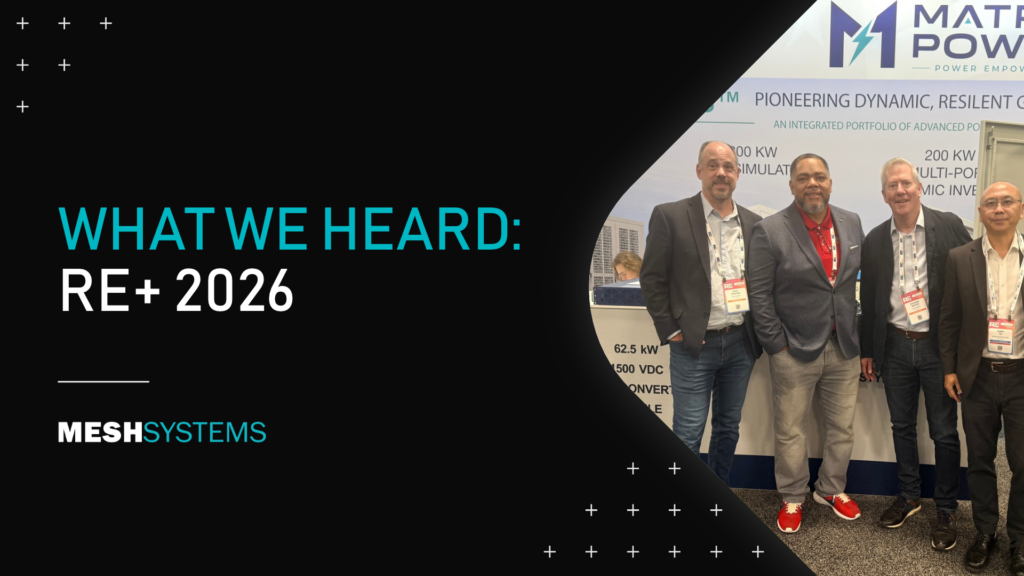
The Mesh Systems team attended RE+ 2026 in Las Vegas to meet with manufacturers and technology leaders across solar, energy storage, EV infrastructure, and grid technology. We heard ambitious plans for new equipment and systems, alongside a practical question: what happens after those products are installed?
One thing that stood out was the number of companies preparing to support growing power needs from AI data centers and EVs. Generation, storage, power conversion, charging, and grid equipment all have a role. The challenge is making those products work together reliably, then supporting them throughout their life in the field.
The Product Story Continues After Installation
For equipment manufacturers, shipping a product is only the beginning. Once it reaches a customer site, teams need to know whether it is connected, how it is performing, and when it needs attention.
That visibility can improve uptime and service. It can help a manufacturer diagnose an issue remotely, understand patterns across installed equipment, and give customers a clearer picture of performance. The value comes when device and operational data lead to a useful decision or a faster response, rather than another dashboard to watch.
Software Is Becoming Central to Energy Equipment
Many of the companies we met have deep expertise in physical equipment. Their products increasingly depend on software to manage energy, coordinate battery storage, integrate with the grid, and communicate with other systems at a site.
That creates an interoperability challenge. A storage system, inverter, charger, and site controller may come from different manufacturers, yet the customer needs them to operate together. Product teams are thinking beyond the capabilities of a single device to the software, data, and interfaces that make the whole installation work.
Moving from a Roadmap to a Scaled Product Takes Engineering Capacity
There was no shortage of ideas at RE+. Teams described products in development and roadmaps that extend well beyond the hardware on display. The difficult part is often getting those ideas into customer environments and supporting deployments at scale.
That work can span embedded software, firmware, connectivity, cloud platforms, and integration with existing site systems. It also takes testing in real operating conditions, where networks, equipment, and customer requirements vary. For manufacturers with a strong product vision, additional engineering capacity can help close the gap between a working concept and a repeatable commercial offering.
AI and Edge Computing Need a Clear Job to Do
AI and edge computing came up in conversations about remote monitoring, predictive maintenance, security, and operating efficiency. Processing data near the equipment can help when a site has limited connectivity or a decision cannot wait for a round trip to the cloud. AI can help teams identify patterns and prioritize what deserves attention.
The useful starting point is a specific operational question. What failure could be detected sooner? Which service alert needs a response? What information would help an operator run a site more efficiently? Those questions determine what data to collect, where to process it, and how an insight becomes an action.
Product Decisions Are Also Shaped by Security and Sourcing
Cybersecurity, regulatory requirements, and domestic manufacturing were part of the product discussion at RE+. They influence where equipment is built, how devices connect, what data can move between systems, and how a platform is maintained over time.
These considerations are easier to address when they are part of the product architecture from the start. A connected offering needs to work in the environments where customers will deploy it and meet the requirements those customers bring with them.
What This Means for Energy Technology Leaders
RE+ showed how much of the energy transition depends on making diverse systems work together in the field. The rising needs of AI data centers and EVs make the scale of that work especially visible. For manufacturers, the opportunity extends beyond delivering equipment to understanding its performance, supporting it remotely, and improving what it can do over time.
At Mesh Systems, we help manufacturers connect products, build the software and platforms around them, and turn equipment data into useful action. The conversations at RE+ reinforced how valuable that work becomes when teams have a clear use case and an engineering path to bring it to market.